Common Raven

Scientific Name: Corvus corax

Habiatat: The Common Raven can be found in a variety of habitats. Common Ravens live in  coniferous and deciduous forests, grasslands, sage brush, mountains, and farms.

Range: Common Ravens can be found in the western half of the U.S. and Mexico, and in almost all of Canada year round. They live throughout Washington all year.

Diet: Common Ravens are omnivores, and they aren’t picky. They eat carrion as big as cows, and eat rodents as small as mice. Common Ravens eat baby tortoises, adult Rock Doves, eggs, Great Blue Heron nestlings, grasshoppers, beetles, rabbits, and fish. Common Ravens eat mostly meat, but they also eat some berries, grains, and buds.

Sound: The Common Raven’s call is a loud, croaking, caw! caw! caw!. Common Ravens sound a lot like crows, but have a deeper and less nasal call.

Nesting: Common Ravens mate when they are 2 to 4 years old. They usually place their nests on bridges, power poles, or other buildings. Females do most of the building. The nest is made of sticks and twigs woven together, and it is sometimes lined with sheep wool, fur, and bark strips. Common Ravens lay 3 to 7 eggs and incubate them for 20 to 25 days.

Behavior:Common Ravens usually travel by themselves or in pairs, although they may gather in large groups at carcasses or other large food sources. If one raven finds a lot of food it will cache some and eat it later.

Description/field marks: The Common Raven is a big bird. It has a wingspan of about 46 inches, and is 22 to 27 inches long. They are black all over and look a lot like crows. Ravens have heavier bills than crows, and Ravens are much bigger. Common Ravens also have scruffy neck feathers, and crows do not.
Posted in jays, crows, and kin

Steller’s Jay

Scientific Name: Cyanocitta stelleri

Diet: The Steller’s Jay is an omnivore, and they eat a variety of things. Steller’s Jays eat insects, seeds, suet, small rodents, invertabrates, other species of birds eggs and nestlings, berries, fruit, and nuts.

Habitat: Steller’s Jays breed in coniferous forests, and winter in coniferous-deciduous forests, suburban areas, green belts, and are common backyard birds.

Range: The Steller’s Jay can be found in most of Washington all year, but not in the south-east corner. Their range also extends north up to Alaska, and south down to California.

Nesting: Steller’s Jays’ nests are made of twigs, moss, stems, and weeds, and they are held together with mud. The nests are lined with animal hair, rootlets, and pine needles. Both the male and the female help build the nest. It is usually placed in a conifer tree, and it is often on a horizontal branch close to the trunk of the tree. Steller’s Jays lay 2 to 6 eggs, and incubate them for 16 to18 days. When the nest is finished it is about 10 to17 inches across.

Behavior: Steller’s Jays are bold and conspicuous birds. They are very loud, and hop around not only on the ground while foraging there, but also up in the trees they inhabit. Steller’s Jays have very good memories, and can store plenty of nuts for the winter in caches.

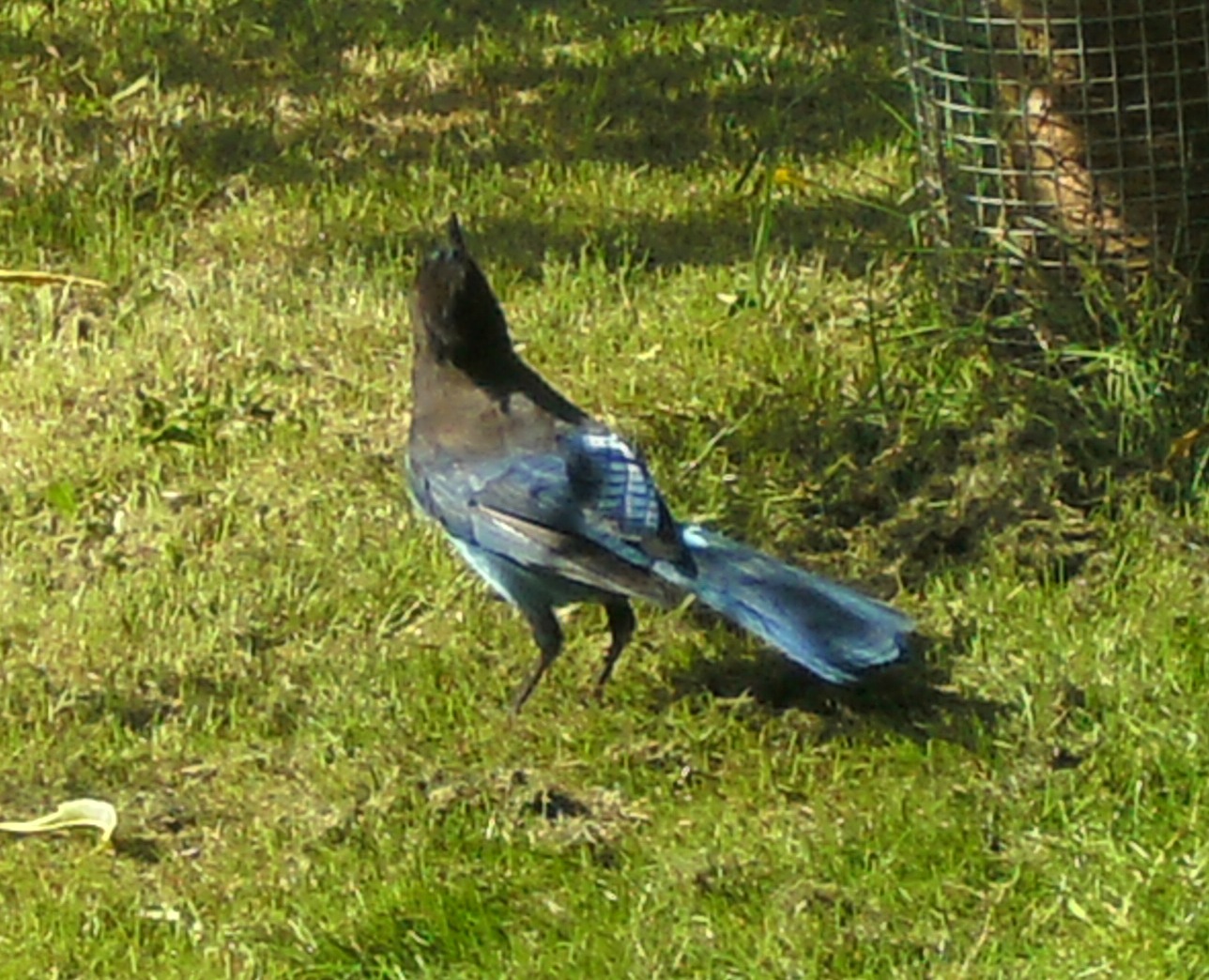
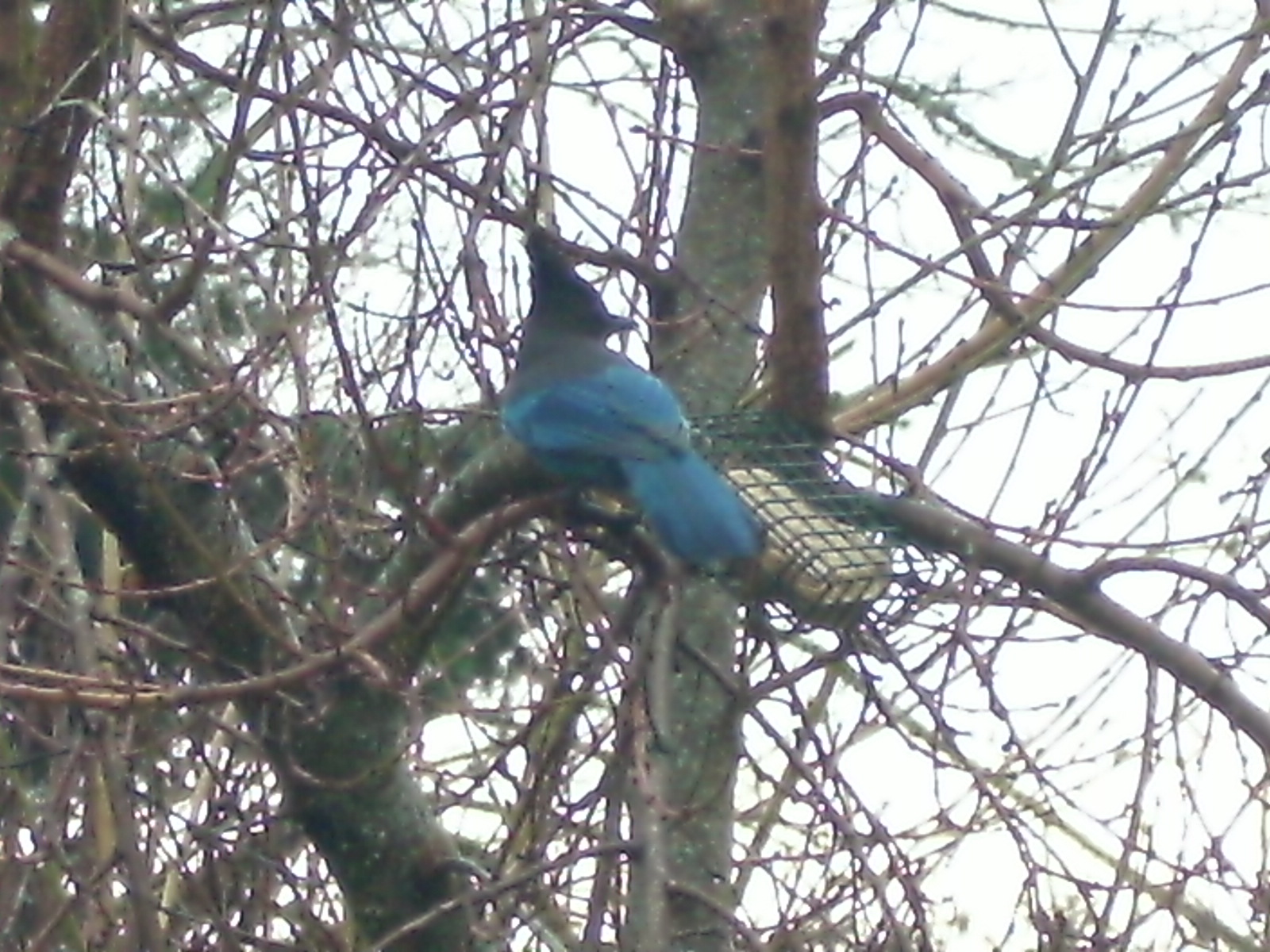
Description/field marks: The Steller’s Jay is about 12 inches long, and it has a wingspan of about 17 inches. Steller’s Jays are royal blue on the back, wings, tail, and underside. They have distinctive black crests, and black upper backs, shoulders, heads, throat and breasts.

How to attract: Steller’s Jays readily come to bird feeders, so to attract them put out a suet or seed feeder.  Steller’s Jays will also take peanuts.

Steller's Jay

Steller's Jay

Steller's Jay

Posted in jays, crows, and kin

Spotted Towhee

Scientific Name: Pipilo maculatus

Diet: Spotted Towhees eat many insects in summer such as weevils, lady bugs, grasshoppers, crickets, moths, bees, caterpillars, and other arthropods. In winter Spotted Towhees switch to eating mostly seeds and plant food like acorns, berries, wheat, corn, poison oak, and oats.

Habitat: The Spotted Towhee can be found in thickets, brushy forest edges, chaparral, and suburban areas, and if there are shrubs and bushes in your yard, Spotted Towhees are likely visitors.

Sound: The Spotted Towhee’s song is a two notes followed by a buzzing trill, or a flute-like drink-your-tea. The call is a harsh mewing sound ascending in pitch at the end.

Nesting: The nest is made from bark, grass, and leaves, and it is lined with pine needles and hair. Spotted Towhees place their nests on or near the ground. If the nest is placed on the ground it is put in a dip so that the rim of the nest is at the same level as the ground. Spotted Towhees don’t usually put their nests in thickets, but they are still well concealed at the base of a log, a clump of grass, or a shrub. Spotted Towhees incubate 2 to 6 eggs for 12 to 14 days. The chicks leave the nest after 9 to 11 days. Spotted Towhees usually lay one brood.

Description/field marks: The Spotted Towhee has a black tail, back, wings, and head. The throat and breast are also black. Unlike the Eastern Towhee (a similar looking species) the Spotted Towhee has white spots on its wings. They have rufous sides, and white undersides. On the underside of the tail there are two white circles which you can see when this towhee hops around, and Spotted Towhees have red eyes. The females are duller.

Behavior: Spotted Towhees are ground foragers. They scruff in the leaves and dirt with both feet to uncover seeds and bugs to eat.

How to attract: To attract Spotted Towhees put out a seed feeder. Since Spotted Towhees are ground feeders it is a good idea to sprinkle some seed on the ground. Place your feeder near shrubs because that is where Spotted Towhees normally are.

Spotted Towhee

A Spotted Towhee at my seed feeder

Spotted Towhee

Posted in sparrows

Yellow-Rumped Warbler

Scientific Name: Dendroica coronata

Forms: There are two forms of the Yellow-Rumped Warbler: the Myrtle Warbler which lives in the east, and the Audubon’s Warbler which lives in the west. They were thought to be two separate species until just recently when scientists discovered that where their ranges meet Myrtle Warblers and Audubon’s warblers breed freely with each other. Now they are one species, Yellow-Rumped Warbler.

Description/field marks: The Audubon’s form of Yellow-Rumped Warbler male has a bright yellow throat and rump, and has patches of yellow on its sides. Its back is gray with streaks of darker gray, and it has white wing bars. There is  a streak of white on the breast, and they have white undersides. The female is gray above, and lighter gray below, with pale yellow on the sides, rump, and throat.The Myrtle form of the Yellow-Rumped Warbler looks the same as the Audubon’s form, except the Myrtle form lack the yellow on the throat.

Behavior: Yellow-Rumped Warblers often wait on exposed branches for insects to fly by, and fly out to catch them like a flycatcher would. In winter Yellow-Rumped Warblers form large flocks which often consist only of Yellow-Rumped Warblers.

Diet: Yellow-Rumped Warblers eat mostly insects during the breeding season. They eat caterpillars and other larvae, leaf beetles, weevils, ants, aphids, grass hoppers, caddis flies, and crane flies.  In winter Yellow-Rumped Warblers change their diets to fruits and berries such as wax myrtle, bayberries, poison ivy, poison oak, juniper berries, dogwood, and virginia creeper.

Nesting: The nest is built by the female, and is made from pine needles, rootlets, grasses, and twigs. The nest may also have moss, lichen, and animal hair built into it. It is lined with feathers and hair. Yellow-Rumped  Warblers usually take about 10 days to make their nests. Yellow-Rumped Warblers lay 4 or 5 eggs, and incubation lasts for 12 or 13 days. When the nest is finished it is 3 or 4 inches across, and they often lay two broods.

Habitat: Yellow-Rumped Warblers can be found in dense and wet conifer forests during the breeding season, and in thickets, thorn scrub, and mangroves during the winter. They also live in open woodlands, orchards, shrubby areas, parks, and suburban areas.

How to attract: Yellow-Rumped Warblers sometimes come to bird feeders, so to attract them put out suet, sunflower seeds, peanut butter, or raisons.

Audubon's Warbler

Non-Breeding Audubon's Warbler

Audubon's Warbeler

Non-Breeding Audubon's Warbler

Posted in warblers

Western Scrub-Jay

Scientific Name: Alphelocoma californica

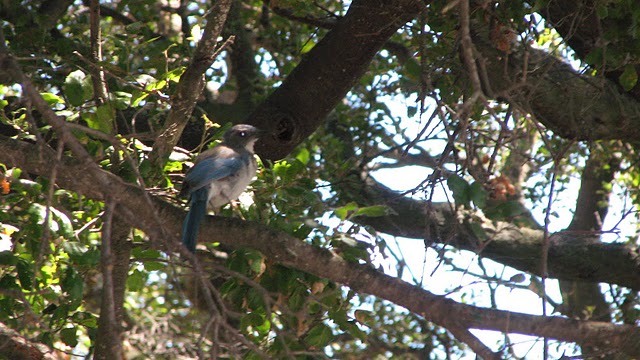
Behavior/diet: Western Scrub-Jays tend to hop and jump along as they scavenge for food instead of walk. They are omnivores, and eat a wide variety of things. Western Scrub-Jays eat insects, spiders, and snails in summer, and berries and acorns in winter. They also eat seeds, amphibians, the eggs of other species of birds, and rodents.

Habitat: The Western Scrub-Jay can be found in suburban areas, where it is a fairly common visitor to feeders, chaparral, pastures, and orchards. They can also be found in oak forests and woodlands, especially if there are dense shrubby plants around.

Sound: The Western Scrub-Jay has a harsh, grating, call that is repeated 4 to 6 times with short pauses in between.

Nesting: The nest is built by the male and female. It is made of twigs, grass, and moss, and lined with hair and rootlets. 3 to 6 eggs are laid and incubated for 15 to 17 days. Western Scrub-Jays usually have only one brood. The eggs are blue-green with brown speckling that is heavier at the big end.

Description/field marks: Western Scrub-Jays are not very brightly colored, but their markings are distinct. Western Scrub-Jays have white throats and undersides, and there are two lines of blue that come down from the shoulders to make a v shape, but they don’t meet at the ends. The wings and tail are blue, and on the back there is a brown triangle. The crown and nape are also blue, but there are patches of brown on the eyes. Western Scrub-Jays also have a very thin white supercilium.

How to attract: To attract Western Scrub-Jays put out a seed feeder. They will take sunflower seeds and peanuts. If you have some shrubs near your feeder these Scrub-jays won’t be to hard to attract.

Western Scrub-Jay

Western Scrub-Jay

Posted in jays, crows, and kin

Common Yellowthroat

Scientific Name: Geothlypis trichas

Habitat: Common Yellowthroats live in wetlands. They prefer dense shrubby vegetation, to help hide them from predetors such as snakes, Red-Tailed Hawks, opposums, raccoons, and other predators. Common Yellowthroats can be found in city parks, wet meadows, marshes, and thickets near streams and rivers.

Diet: The Common Yellowthroat eats almost all insects and spiders, but sometimes they eat seeds. Common Yellowthroats eat a variety of different kinds of bugs including dragonflies, butterflies, crane flies, field crickets, webworm caterpiller, different kinds of beetles, carpenter ants, aphids, earwigs, canker worms, and grasshoppers.

Nesting: The nest is placed on or near the ground, usually in a shrub. It is often placed in a clump of grass, bulrushes, cattails, or reeds. The nest is a loose cup made of grass, weeds, leaves, and sedge, and it is lined with hair, fine bark, and grass. Common Yellowthroats  lay 3-5 eggs, which the female incubates for12 days.

Sound: The Common Yellowthroat’s song is a warbled wichety-wichety-wichety-wich!, and the call is a sharp tchit! tchit!

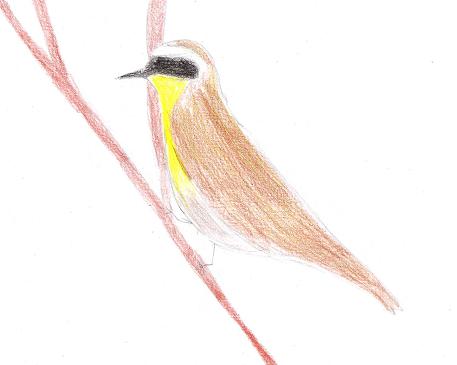
Description/field marks: Common Yellowthroats are about 41/5 to 6 inches long, and have thin bills for eating insects.The male Common Yellowthroat has very distinct markings. The males have black masks across their eyes, and above the black there is a thinner white line. The back is yellowish brown, and the throat and breast are bright yellow. The underside is also yellowish brown. The females are less conspicuous. They have yellow throats, and they are olive or brown on the back. The underside is a dull yellow-green color.

Common Yellowthroat

Common Yellowthroat

Posted in warblers

Red-Breasted Nuthatch

Scientific Name: Sitta canadensis

Behavior: The Red-Breasted Nuthatch climbs down trees head first to get at the insects in crevices that woodpeckers and other insect-eating birds did not notice going up the trees. Red-Breasted Nuthatches start at the top of a tree and spiral down, and when they get to the bottom they fly up to the top of the next tree and do the same thing.

Diet: Red-Breasted Nuthatches eat mainly arthropods during the summer. They eat beetles, caterpillars, spiders, earwigs, and ants. In fall and winter Red-Breasted Nuthatches eat more seeds, including seeds that they have cached and seeds they eat from conifer trees. The diet of nestlings is almost entirely seeds.

Habitat/sound: The Red-Breasted Nuthatch’s call is a loud and nasal yank! yank! yank!, and can be heard mainly in conifer forest of spruce, pine, fir, western red cedar, hemlock, and larch, but can also be found in mixed coniferous-deciduous forests. Red-Breasted Nuthatches can be found in patches of smaller and more open woodlands, but prefer closed canopies and mature trees.

Nesting: Red-Breasted Nuthatches are cavity nesters. Both the male and the female excavate the nest hole. Usually Red-Breasted Nuthatches excavate a cavity in a rotten snag, often an aspen, but sometimes use nest boxes, old woodpecker holes, or natural cavities. Red- Breasted Nuthatches build  shallow cups of grass, strips of bark, and pine needles, and the nests are lined with fur, feathers, and shredded bark.

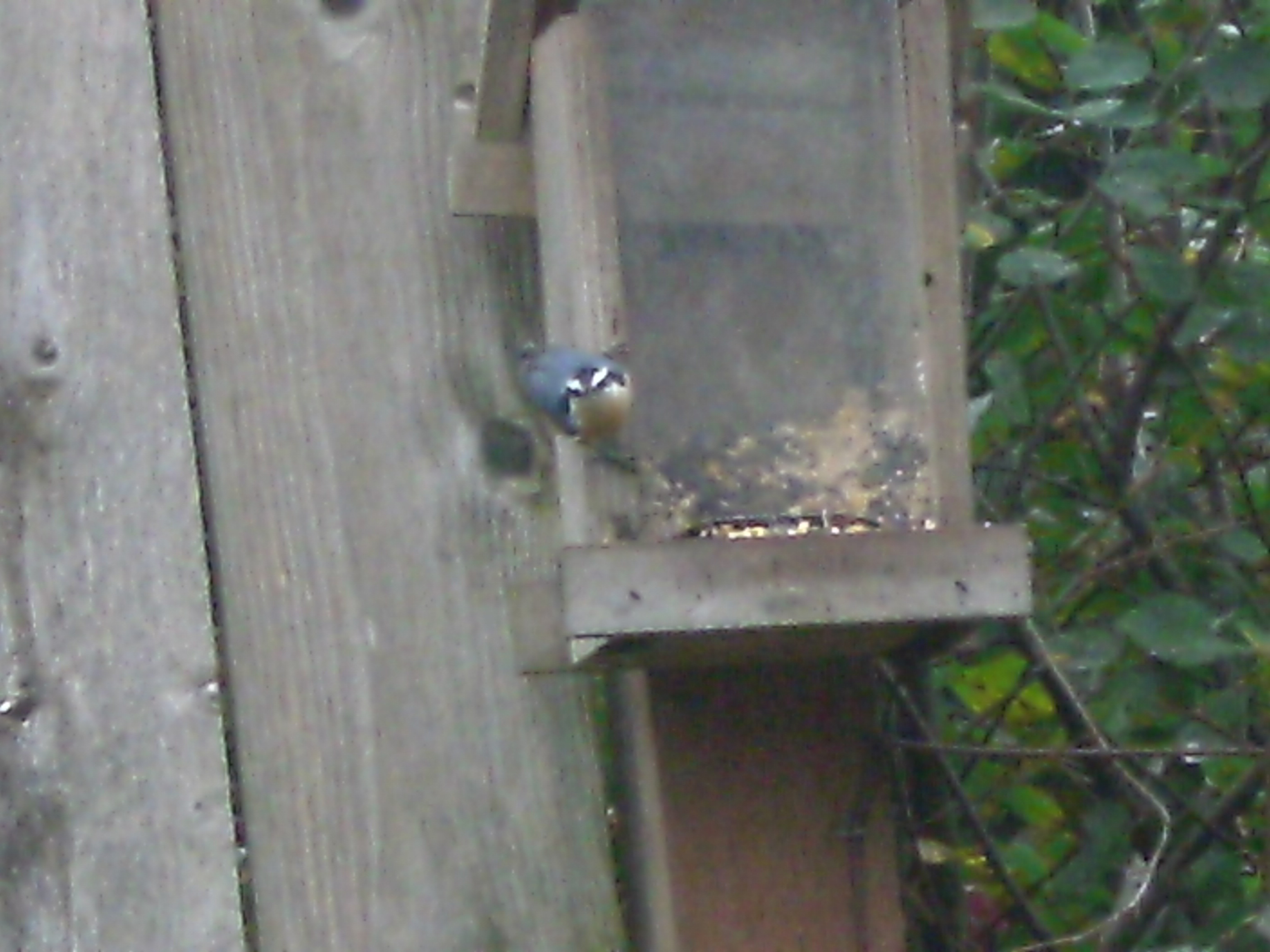
Description/field marks: The Red-Breasted Nuthatch has a brick red breast and underside. The wings, back, and tail are slate gray. The supercilium is white, a black line goes through the eye, and the crown is black. Red-Breasted Nuthatches are about 41/2 inches long, and have long, straight, wren like bills.

How to attract: To attract Red-Breasted Nuthatches, put out a seed or suet feeder. Red-Breasted Nuthatches will eat sunflower seeds or peanuts. They may come to a nesting box, but don’t get your hopes up.

red-breasted nuthatch at seed feeder

Red-Breasted Nuthatch

red-breasted nuthatch at seed feeder

Red-Breasted Nuthatch

Posted in chickadees, nuthatches, and allies Tagged , ,

Violet-Green Swallow

Scientific Name: Tachycineta thalassina

Nesting: The Violet-Green Swallow is a cavity nester. It places its nest in a cavity in cliffs,  old woodpecker holes, buildings , or nest boxes. The nest is made from grass, small twigs, straw, rootlets, and it is lined with feathers. 4-6 eggs are incubated by the female for 14-15 days.

Diet: Violet-Green Swallows eat almost only flying insects. The insects they eat include leaf hoppers, leaf bugs, ants, wasps, wild bees, and beetles. They eat and drink while flying.

Habitat: The Violet-Green Swallow can be found in a variety of places. During migration they are often seen near water. Violet-Green Swallows live in young forests, clearcuts, prairies, wetlands, lakes, and forest edges.

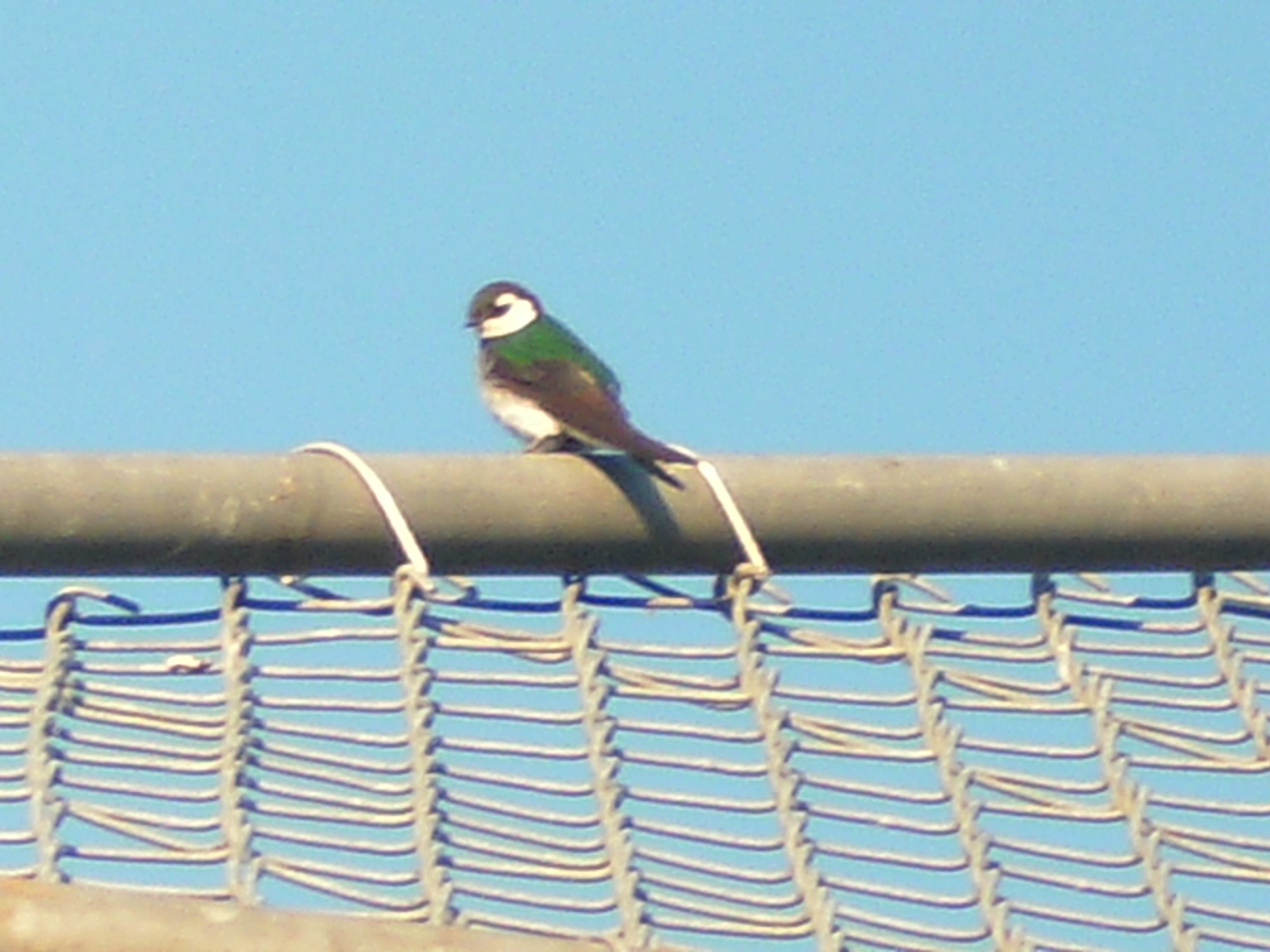
Description/field marks: As the name suggests, Violet-Green Swallows are violet and green. The two colors that aren’t mentioned are the grayish-brown on the wings, and the white on the underside and cheeks.Violet-Green Swallows have a patch of violet on the rump, and a small strip of white right above it. They have emerald green on the back and head.

How to attract: To attract Violet-Green Swallows, put out a nest box. You can buy one at a wild bird shop, or you can make one yourself.(It’s a lot cheaper to build one!)

Posted in swallows Tagged , , ,

Belted Kingfisher

Scientific Name: Ceryle alcyon

Diet: The Belted Kingfisher eats a variety of foods. The main diet of a Belted Kingfisher is fish, but they also eat aquatic invertebrates, crayfish, frogs, snails, tadpoles, and insects. Belted Kingfishers even eat small vertebrates, berries, small reptiles, and amphibians. They hover above the water, and dive when they spot a fish, or sit in a low tree, where they can watch the water for fish.

Habitat: Belted Kingfishers live in practically an wetlands including, lakes, streams, marshes, and almost anywhere else there is water.

Sound: The Belted Kingfisher’s call is a very loud, harsh rattle.

Nesting: Belted Kingfishers breed along streams, rivers, lakes, and wetlands, where they can dig out a burrow in the banks of rivers, lakes, and streams to lay eggs in. 5 to 8 eggs are laid in a chamber at the end of a tunnel. The nest is not lined. Belted Kingfishers nest from April to July, and have one brood. Both of the parents incubate the eggs for 23 to 24 days.

Behavior: The Belted Kingfisher hunts over clear water. It hovers or perches above the water, and when it spots prey it dives into the water and catch it. The Belted Kingfisher then brings it to a perch and whacks it on the perch to kill it.

Description/field marks: The Belted Kingfisher is easily identified by its large bill and scruffed up looking crest. Belted Kingfishers have dark blue backs, heads, and wings. They have white undersides, and a dark blue strip across the breast. Females have a thinner strip of brown underneath the blue strip.

Posted in kingfishers

Bewick’s Wren

Scientific Name: Thryomanes bewickii

Sound: The Bewick’s Wren has a beautiful voice. Its song is a variation of whistles and trills sung by the male at nesting time when he uses song to defend his and his mates nesting territory.

Nesting:The nest is placed in a natural cavity, old woodpecker hole, or a nest box. It is constructed of sticks, leaves, moss, spider egg cases, hair, and feathers, and is often lined with snake skin. The 3-8 eggs are incubated for 14-16 days, and are white and lightly speckled.

Habitat: Bewick’s Wrens live in shrubby areas around rivers, wetlands, and other riparian places. These wrens can also be found in urban and suburban parks. The Bewick’s Wren especially likes chaparral, and planting it in your yard is a good way to attract them. Bewick’s Wrens also live in gardens, clearings, and orchards, and like thick undergrowth.

Diet: The Bewick’s Wren eats mainly insects and spiders. These Wrens occasionally eat seeds and eat a variety of arthropods. Bewick’s Wrens are foragers. They glean insects of the leaves of trees and shrubs, and forage on the ground for insects as well.

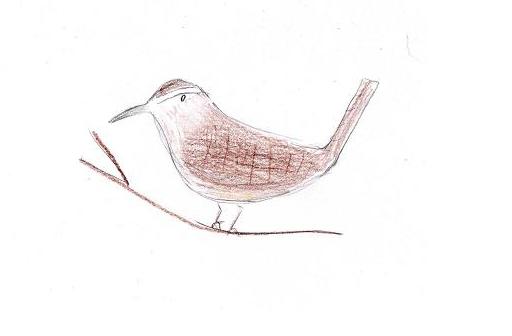
Behavior: Like many other wrens, Bewick’s Wrens are often seen with their tails cocked upward. They forage for insects in the lower branches of trees and shrubs.

Description/field marks: The Bewick’s Wren is a fairly plain bird as for looks. It has a white supercilium, its breast and underside is grayish white, and its back, wings, and head are brown. Bewick’s Wrens are about 4 inches long, and has a long, thin, slightly turned down bill.

How to attract: To attract Bewick’s Wrens plant golden current, scrub oak, and mountain mahogany. Any shrubs you plant in your garden will also help attract these wrens.

Bewick's Wren

Bewick's Wren

Posted in chickadees, nuthatches, and allies